
The Post-Winter Asset Audit: Neutralizing Chloride Corrosion on Heavy Machinery
As the snow starts to melt, the 2026 construction season begins, and fleet managers across Canada are facing a minor issue: chloride residue. Even after your heavy equipment is pressure-washed, a white chalky layer on the equipment is more than just dirt. It is a corrosive chemical that can increase rust formation on the bodies of heavy equipment by up to 185%. But in April, do not just wash the equipment; rather, audit it. In this article, we will look into neutralizing chloride corrosion on heavy machinery to reduce salt damage and protect your investment.
The Post-Winter Asset Audit
1. The “Hidden” Corrosion Hotspots
Salt doesn’t just sit on the equipment’s hood; it penetrates the most sensitive mechanical parts. During the audit, do not forget to check:
- Electrical Connectors & Wiring Harnesses: Deicing materials, especially road salt and liquid brines, are highly corrosive. If there are any residues left on or near the connectors, they can lead to shorts and sensor failures, causing your machine to stop working for days.
- Radiators and Oil Coolers: The cooling stacks have thin aluminum fins that can be easily corroded by chlorides, leading to pinhole leaks and overheating.
- Brake Lines and Hydraulic Fittings: The most important parts to take care of, as corrosion on these parts is not only a maintenance issue but a safety risk
- Chassis Pivot Points: Sometimes salt will be trapped in grease seals. This acts like sandpaper, grinding the metal parts from the inside.
2. Why Water Alone is Not Enough
In fleet maintenance, most of us assume that a pressure washer cleans the salt off. But the reality is that sodium and magnesium chloride are known to be hygroscopic. They stick to the metal surface and draw moisture directly from the air into the metal. Regular vehicle-washing soaps will not completely break the ionic bond, so the salt remains even after the equipment appears clean and dry.
3. The Three-Step Neutralization Process
The fleet maintenance team should follow the protocol outlined below to fully decontaminate your equipment. They are:
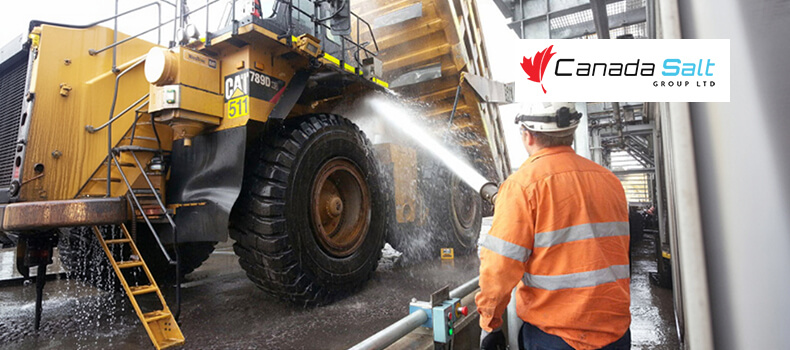
- The High-Volume Rinse: Use more water rather than more pressure to remove heavy mud and salt from the equipment.
- Chemical Neutralization: Use a salt neutralizer, such as Saltbuster or Neutrowash. These products use a chelation process to remove chloride ions from the metal.
- The “Squeaky Clean” Test: After the cleaning process is complete, check for any chalky or gritty texture on the equipment’s surface. If you feel that salt is still there. Apply the neutralizer again to obtain a smooth finish.
4. Protecting Your Resale Value
In 2026, most of the buyers aren’t just looking for a clean service record, but they are looking for salt-free, maintained equipment
- Document the Audit: Maintain a record of the equipment’s neutralization and include the dates to avoid confusion.
- Apply a Protective Barrier: Once neutralization is complete, use a corrosion inhibitor or a wax-based undercoating to maintain the metal in a sound condition.
An Ounce of Neutralizer is Worth a Pound of Steel
Replacing equipment parts can be expensive. Spending a few dollars on professional-grade salt neutralizers can be a cost-effective way to extend the life of your heavy equipment.
Contact Canada Salt Group Ltd today to order bulk road salt or speak with the experts about proper salt use to reduce corrosion on your equipment and infrastructure.