
Pre-wet vs Dry Salt: What’s More Efficient for Snow Removal Crews?
Winter maintenance is much more than just moving snow from one place to another. It’s all about following the timing, adhering to budgets, regulations, and public expectations, and predicting unexpected weather changes. Snow removal crews and municipalities work under immense pressure of poor visibility, freezing temperatures and overnight hours to deliver you the perfect results. In this process, they make an important decision on whether to use pre-wet salt or dry salt. While both melt the ice, they work differently under different weather conditions. In this article, we will explore the key differences between pre-wet and dry salt and discover which is more efficient for snow-removal crews. Let’s get started!
Why Efficiency Plays a Key Role in the Snow Removal Process
In this fast-paced world, efficiency is highly important. In terms of snow removal, efficiency refers to how quickly surfaces are cleared, how much salt and other resources are used, the reapplication rate, and the sustainability of operations. Due to rising material costs, environmental concerns, and limited service-level agreements, the phrase “more salt, better results” is no longer applicable. This is why pre-wet salt and dry salt have become common topics among snow removal contractors and municipalities.
Understanding Dry Salt
What is Dry Salt?
Dry salt, also known as sodium chloride or rock salt, is commonly used as a deicing material. It is mined from salt mines and processed without additives. For decades, people have been using rock salt for snow and ice management because of its availability and affordability.
How Dry Salt is Traditionally Used
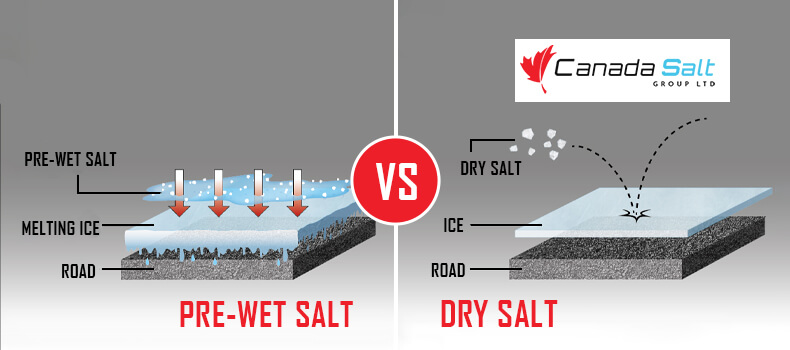
Dry salt is spread on surfaces either directly or with salt-spreading machines. After it is applied, it draws on surface moisture and dissolves, forming brine. The brine lowers the freezing point of water, so the ice melts. This process works, but takes time, especially when the temperature is very cold or dry.
Pros of Using Dry Salt
- Familiar
- Affordable
- Easy to use
- Equipment is easily available
- Simple storage
Cons of Using Dry Salt
- Bounce and scatter issues
- Need time to start its action
- Material waste
- Frequent reapplication required
What Is Pre-Wet Salt?
Pre-wet salt is similar to dry salt but is mixed with a liquid deicing agent to enhance its melting action. As a result, the melting process begins immediately upon reaching the surface. This simple addition of liquid deicer will improve the performance and efficiency of the salt.
Liquids used in pre-wetting
- Brine
- Calcium chloride
- Magnesium chloride
How Pre-wetting Works
Unlike dry salt, pre-wet salt doesn’t need moisture to start working. It already has a liquid coating, which makes it easier to get started on dry or lightly frosted surfaces. This swift action is crucial during the early stages of the storm. As the brine is already present with the salt, it readily interacts with the snow, preventing it from sticking to the surface. This makes snow removal easier and more effective.
Efficiency Comparison: Pre-wet vs Dry Salt
Pre-wetting salt makes the work easier for crews by allowing them to cover large areas more quickly. As it sticks to the surface easily, it requires fewer passes, and the salt spreads evenly. It is more efficient than dry salt at melting speed, particularly in colder areas. Faster melting means safer surfaces.
Due to the high efficiency, most operations reported using 20% – 30% less salt after starting pre-wet salt. This has a large impact on the budget and storage needs.
Cost Considerations for Snow Removal Crews
Using dry salt is easy and requires little or no equipment for spreading. Pre-wet salt requires tanks, spray bars, pumps, and controls, which can be considered an initial cost that pays off over time. Over time, you can observe a gradual reduction in salt use from season to season, which means lower operational, materials, and handling costs. Most snow removal contractors achieve ROI within a few winter seasons, and sometimes even faster for high-use operations.
Performance in Different Weather Conditions
During light snowfall or freezing rain, wet salt is effective at preventing ice formation. If the snowfall is heavy, prewetting salt when it is spread improves the plowing efficiency, allowing for cleaner passes. But, during extremely cold temperatures, it should be combined with calcium or magnesium chloride to maintain its effectiveness.
Environmental Impact Comparison
Due to excessive use of dry salt, chloride levels in the soil and nearby waterways will increase, raising environmental concerns. But due to lower material use of pre-wet salt, total runoff and environmental impact will be reduced.
Safety and Liability Considerations
Because pre-wet salt melts faster, the pavement clears more quickly, reducing the risk of slips, falls, and vehicle accidents. Refreezing will be less when melting is faster, and coverage is better as the temperature drops.
Municipal vs. Private Contractor Perspectives
Municipalities mostly use pre-wet salt rather than dry salt because it melts faster, helps control costs, offers environmental benefits, and improves public safety. Whereas private snow removal contractors benefit from its faster action, lower material cost and customer satisfaction.
Best Practices for Using Pre-Wet and Dry Salt
When to Use Pre-Wet Salt
Pre-wet salt is recommended for use before or during a snowstorm, particularly when the temperature is below 20°F. Because the salt contains a liquid brine coating, it adheres to the surface rather than bouncing on the ground. This feature makes it ideal for anti-icing, quick ice control and reduced salt usage. Pre-wet should be prioritized in high-traffic areas where quick action is required.
When to Use Dry Salt
Dry salt works best when the snow has already accumulated, and the temperatures are above 20°F. It is used to melt packed snow and ice on roads, parking lots and sidewalks. Dry salt is easy to store and spread, making it a common choice for regular snow removal. But remember, it works more slowly than pre-wet salt.
Conclusion
The choice between dry salt and prewet salt depends on factors such as weather conditions, timing, and goals. But, as per the above write-up, it is clear that pre-wet salt has more edge than dry salt. Whereas dry salt remains a standard and familiar deicing agent. For snow removal contractors looking to improve efficiency, choosing the right salt type is important. At Canada Salt Group Ltd., we provide high-quality road salt to snow-removal contractors and municipalities. Contact us and book your bulk road salt today!