
Tips to Reduce Salt Waste During Winter Maintenance
In the winter months, road salt is present everywhere in the National Capital Region. Unfortunately, we knew that salt spread on roads, sidewalks, driveways, and parking lots washes into our urban streams and creeks, causing serious problems for our ecosystem. We have monitored 30 streams over the past 4 years; 90% of the sites repeatedly saw levels of contamination from salt, which harms freshwater species.
Canadians often tend to misuse and overapply road salt. While municipalities and private companies need to overcome this issue at a large scale, every individual can take practical measures to reduce road salt use. In this article, we explore tips for reducing salt wastage during winter maintenance; let’s get started.
Tips for Reducing Salt Wastage during Winter Maintenance
Winter maintenance doesn’t have to depend on large amounts of road salt to keep the surfaces safe. The right techniques and planning ahead of the season make the difference. The following are tips for reducing salt wastage during winter maintenance.
Use Alternatives for Traction
Road Salt is a chemical deicer, but there is a common misperception among people about how it works. Rather than melting the ice, it dissolves in moisture and lowers the freezing point of water, preventing ice from forming and helping existing ice melt. As the salt mixes with the snow, it creates a solution that gradually breaks down the ice. This salty water solution drains away from the surface.
Generally, salt is not intended for grit or traction. The purpose of salt is to melt ice by creating a brine solution, not to create a textured surface for walking or driving. If you are spreading more and more salt to gain traction, you are using the salt incorrectly. Instead, use a product like sand or gravel to provide a layer of traction between your surface and ice. In addition, you can sweep up the remaining gravel at the end of the season and use it again the following year, which saves you money and helps the government.
Check the Temperature
A solution made of road salt and water has a lower freezing point than water. Road salt doesn’t remove ice buildup at extremely low temperatures.
The temperature at which the salt stops being effective totally depends on what type of salt you are using. The most commonly used deicer is rock salt (NaCl); it becomes ineffective at lower temperatures, and you need to add a large amount of salt to get the same melting effect when compared to normal winter conditions.
Hence, next time, check the temperature of the salt before using; if it is lower than -10° Celsius, look for an alternative salt instead of using a large amount of salt for melting the ice.
Use Less Salt
Applying more salt won’t give you better deicing results; it only harms our freshwater ecosystem. Use less salt accordingly.
For deicing one square meter of surface area, you only need 2 tablespoons of salt. To deice a standard sidewalk square in the city of Ottawa, you require 8 tablespoons of salt, and one coffee mug full of salt for a standard driveway.
Instead of letting the salt clump together, spread the salt on the surface for better results. A common thumb rule is that if you are stepping on more than seven salt grains in a single footstep after spreading the salt on the surface, then that is too much salt used on the surface.
Shovel Often
One of the best ways to reduce the need for salt is to prevent the ice buildup in the first place. Shovelling snow promptly, before the ice melts and refreezes, helps prevent ice buildup and reduces the usage of deicing products.
Productive shovelling increases salt effectiveness, as the salt works best before ice has formed. Road salt mixes with the water and prevents ice formation. Spreading salt on a clear surface prevents ice formation and reduces the need for salt.
Calibration of Equipment
Calibration allows you to measure the exact amount of product you apply, providing more accurate and efficient deicing with less salt usage. These procedures are readily available in online manuals. This is a standard component of training for salt truck operators.
Variable Application Rates for Salt Spreaders
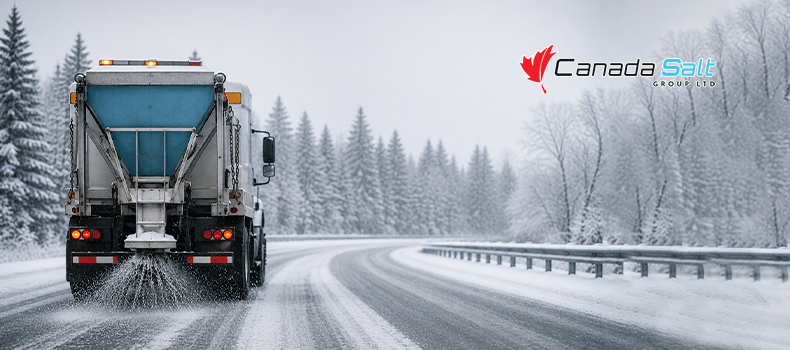
Automatic salt spreader controls allow the salt truck operators to program salt application rates. As a result, the amount of salt being applied changes with the speed of the ground, which reduces bounce and scatter. These salt spreader controls also account for curves and hills, which require more salt than flat or straight roads.
Vehicle location sensors allow the salt distribution to a precise location along the route. Salt monitoring can be done precisely, and adjustments can be made and the total salt distribution tracked with sensor vehicle data.
Proper Salt Storage
Effective salt storage practices can protect the salt investment and environment. Salt loss and pollution can be reduced with the right storage system. These include building salt storage sites on impermeable surfaces, implementing secondary containment systems, and regular inspection of salt stock storage to prevent salt loss and environmental impact.
Good Housekeeping
Unexpected spills and releases of road salt from vehicles are inevitable. Cleaning up the spills will reduce the unwanted release of salt into the environment. Now, collection systems are available where the vehicle wash water is recycled and used to produce brine solution for anti-icing applications.
Road Condition Information Systems
Road and weather conditions should be shared between transportation officials and weather forecast providers to support targeted, coordinated road salt application. In addition to this, smartphones, sms alerts, and web- based platforms allow travellers to make decisions about road conditions before travelling.
Sweep and Store
Salt management doesn’t conclude when the storm passes and the snow melts away. Post-storm cleanup is one of the best ways to reclaim wasted money. Once the surface dries, look for leftover salt crystals sitting on the surface. If salt remains on the surface after the ice melts, it means more salt was applied on the surface than necessary. Use a stiff broom to sweep up leftover salt and collect it for future use.
Sweeping avoids the excess salt from washing into nearby soil, gardens, and drains during rainfall.
Upgrade Your Winter Strategy with Canada Salt Group Ltd
Reducing salt waste during winter maintenance lowers costs, improves efficiency, and has less environmental impact. Minimizing salt waste starts by using the right products for the right temperatures. Canada Salt Group Ltd is Canada’s top bulk road salt supplier and treated deicers. Liquid calcium chloride and eco-friendly melting agents maximize efficiency. Contact us today for a free quote.