
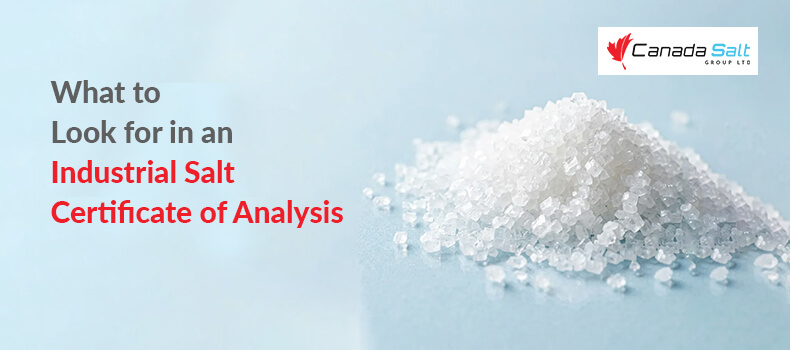
What to Look for in an Industrial Salt Certificate of Analysis
Industrial salt is used in chemical manufacturing, water treatment, food processing, road maintenance, and several other industries. However, the quality of salt depends on industry requirements and processing methods. Choosing the right quality of salt is important because poor quality can affect production, equipment performance, and overall quality of the final product.
One way to check salt quality before purchasing is to review its Certificate of Analysis (COA). This document provides details about the salt’s composition, purity, moisture content, and other important properties. For industrial buyers. Understanding a COA makes it easier to compare products and check quality requirements. In this article, we look into what to look for in an industrial salt certificate of analysis
What is an Industrial Salt Certificate of Analysis?
A Certificate of Analysis is a document that shows the results of quality tests performed on a product. For industrial salt, it includes information about sodium chloride content, moisture, impurities, and particle size. Salt suppliers issue this document to help customers understand the quality of the product. Based on the salt grade and its intended use, the COA may contain several test results that indicate whether the product meets the required specifications. However, it is important to remember that a certificate does not guarantee salt is suitable for every application; the test results must meet the needs of your application.
Key Parameters to Look for in an Industrial Salt Certificate of Analysis
Not every industrial application requires the same salt specifications. However, several key parameters are worth checking when reviewing an industrial salt certificate of analysis.
1. Sodium Chloride Purity
Sodium chloride is the main component of salt, so its concentration is one of the important parameters buyers should check. The purity percentage indicates the amount of sodium chloride in the salt. The required purity level depends on the application. Some industrial processes require high-purity salt, while others can accommodate a broader range of specifications.
While checking this section of the COA, check the reported NaCl percentage and compare it with your purchasing requirements. Also check whether the result is calculated on a dry basis or an as-received basis, as these can produce different values. Choosing the right salt quality helps you avoid paying for specifications and purchasing a product that falls short of expectations.
2. Moisture Content
Moisture content shows how much water is present in the salt. This is an important parameter for businesses that store, transport, or handle large quantities of salt. High moisture content makes the salt damp and creates difficulties during storage or handling. Moreover, it may also affect the accuracy of measurements when salt is purchased. When used with automatic feeding systems, damp salt may not flow smoothly, leading to additional handling.
While checking moisture content, compare the required operating value with the reported value. It is important to consider understanding how the salt will be transported and stored, as exposure to moisture can affect its condition after delivery.
3. Insoluble Matter
It refers to material in the salt that does not dissolve under the conditions of the specified test. It may include sand, mineral particles, or other impurities. This parameter is specifically important when salt is dissolved in water. Excessive insoluble material can leave sediment behind and increase the need for filtration.
Check the amount of insoluble matter reported on the COA and make sure it falls within your specified limit, and also consider how insoluble matter could affect maintenance and operating costs.
4. Calcium and Magnesium Content
Calcium and magnesium are minerals that may be present in salt along with sodium chloride. Their concentration can matter in processes where dissolved impurities need to be carefully controlled. In some industrial processes, calcium and magnesium can contribute to scale formation or deposits, which may increase cleaning requirements and affect equipment performance.
When reviewing the COA, check whether calcium and magnesium are listed separately and compare their concentrations with your application requirements. Before comparing results from different suppliers, make sure the units and reporting basis are consistent.
5. Sulfate Content
Sulfate is another parameter to look for in an industrial salt certificate of analysis. The importance of sulfate depends on the specific industrial application and how sensitive the process is to other dissolved substances.
A COA may report sulfate content as a percentage or another unit of measurement. Compare the result with your required limit and check whether the supplier uses an appropriate testing method. If the certificate does not include sulfate content, ask the supplier to provide the results separately if your application requires them.
6. Particle Size
Particle size affects how salt dissolves, blends, and moves through processing equipment. Therefore, it is an important parameter when choosing the right industrial salt. Fine salt dissolves faster under the same conditions, while coarse salt may be better suited to specific processing needs.
A COA may include particle size ranges and test results, which provide the proportion of salt particles that fall within particular sizes. While checking this information, make sure the product matches your operating requirements. If your operation requires a specific particle size, confirm the acceptable range with your supplier before ordering the salt.
The Importance of COA in Industrial Salt Procurement
Salt quality can affect how smoothly an industrial process runs. Even small differences in moisture, purity, or particle size can create problems in applications where consistent material quality is important. Checking the COA before purchasing helps businesses understand what they are receiving and whether it meets their requirements.
Here’s why this document is important:
- Supports quality control: Maintaining certificates for different shipments helps businesses track product quality and maintain records for internal inspections and supplier evaluations.
- Confirms salt quality: A COA provides important information about the product’s composition. Buyers can check whether the salt meets the required purity and specifications.
- Helps maintain product consistency: When salt quality remains consistent, businesses can maintain more reliable operating conditions and reduce unexpected variations in their processes.
- Helps reduce equipment breakdowns: Higher insoluble matter or unsuitable particle sizes can contribute to deposits, blockages, and additional cleaning in systems. Comparing the relevant test results helps businesses identify potential concerns.
Industrial Salt Certificate of Analysis: Common Mistakes to Avoid
A COA helps you assess product quality when you understand its results correctly. Understanding the requirements and actual salt specifications can help you choose the right product.
The following are a few common mistakes industrial buyers should avoid
- A high sodium chloride purity percentage does not guarantee it meets every industrial requirement. Moisture, insoluble matter, and other impurities may also affect the performance. Choose the right percentage based on your requirements.
- Avoid overlooking the units mentioned in the report. For instance, percentages and parts per million (ppm) offer different concentrations. Check the units before comparing results.
- Check the reporting basis, as purity measured on a dry basis may differ from purity measured on an as-received basis.
- Ensure that the COA matches the product being supplied. A certificate from a previous shipment does not confirm the quality of the current shipment.
- Ask the supplier about the missing parameter information, which is important to your industry operations.
Conclusion
Understanding an industrial salt certificate of analysis helps businesses choose the right products that meet their quality requirements. As mentioned above, by looking for key parameters in the industrial salt certificate of analysis, buyers can decide whether the salt is suitable for their industrial operation.
Canada Salt Group Ltd. offers a wide range of salt solutions for commercial and industrial needs, including bulk road salt, treated salt, and bagged salt, along with pickup, delivery, and storage options. Contact us today for a free quote!